

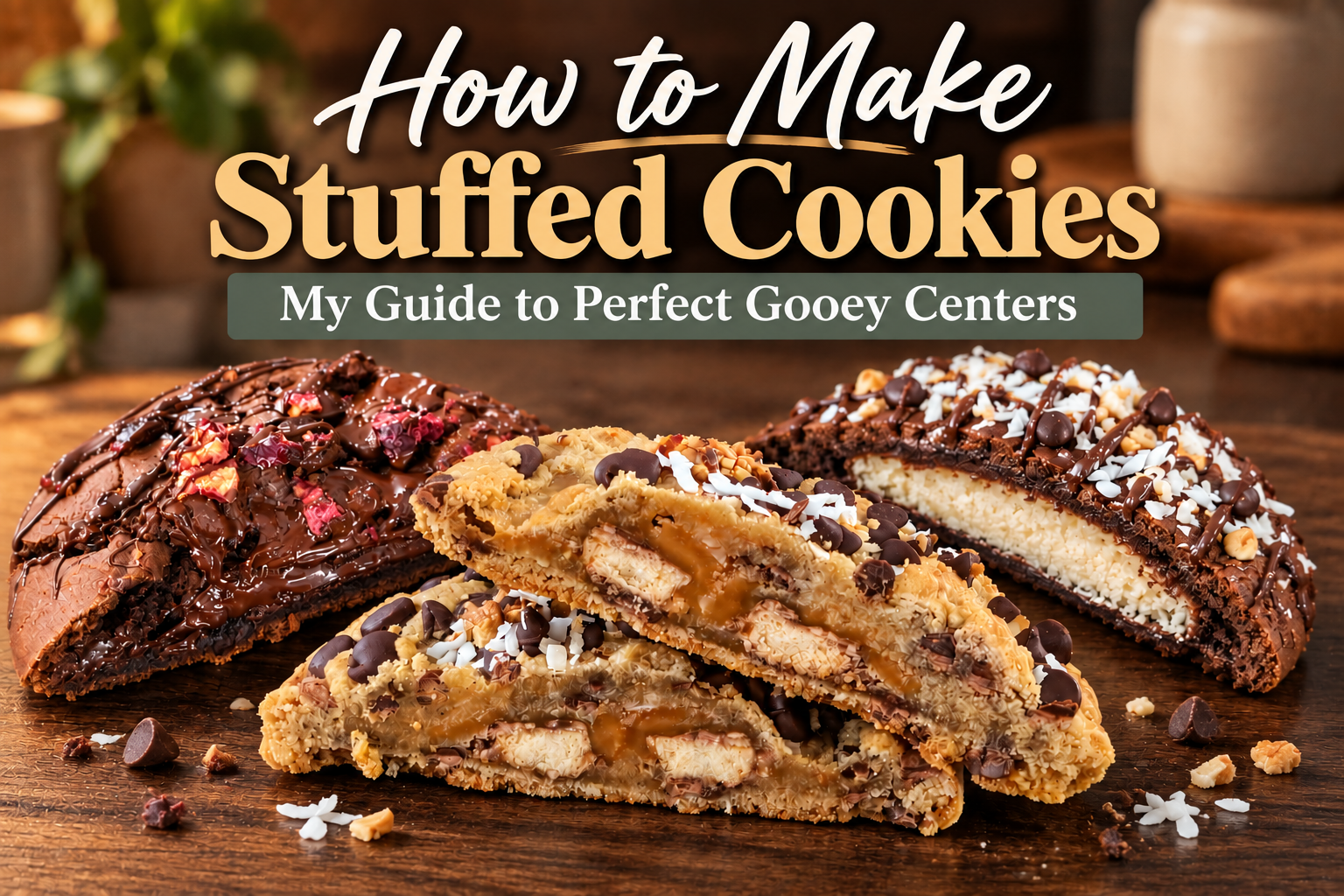
Stuffed cookies sound pretty simple. Put something delicious in the middle of cookie dough, wrap the dough around it, bake it, and you should end up with a beautiful gooey center.
I’ve learned that stuffed cookies don’t always cooperate quite that easily.
I’ve stuffed my giant bakery-style cookies with Nutella, caramel, brownie pieces, peppermint patties, truffle and ganache-style centers, cream centers, and quite a few other fillings. Some have worked beautifully. Others have found just about every possible way to escape from the cookie.
And that’s probably the most important thing I’ve learned: different fillings don’t behave the same way.
There isn’t one technique that’s going to work perfectly for everything you decide to put inside a cookie.
This isn’t one specific stuffed cookie recipe. It’s a guide to what I’ve learned about choosing and preparing fillings, getting them inside a giant cookie, keeping them there, and figuring out what went wrong when things don’t go according to plan.
If you’re new to making my larger cookies, you may want to read my giant bakery-style cookies guide first. That’s where I explain my overall method for making my 5-ounce cookies.
For more general questions about flour, spreading, ingredients, and cookie texture, you’ll find those in my Tips for the Perfect Cookie.
Start With Cookie Dough That Can Hold a Filling
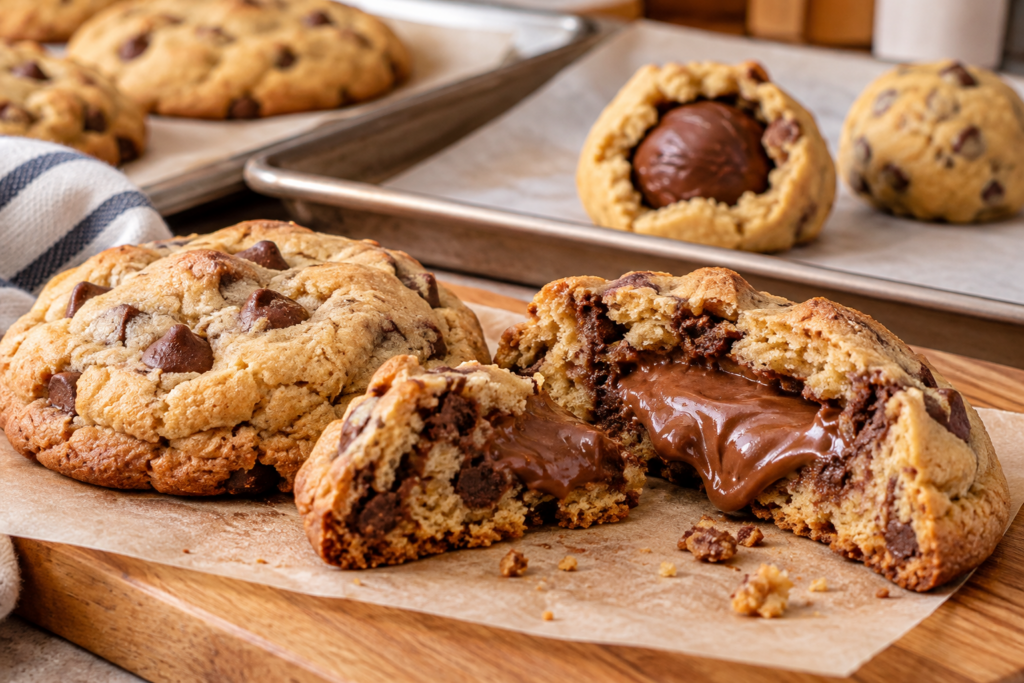
Before I worry about what goes in the middle, I pay attention to the dough that’s going around it.
The dough needs enough structure to hold the filling, but it also needs to be workable enough that I can completely surround the center without creating cracks or thin spots.
If my dough seems too sticky or my test cookie spreads too much, I may gradually add a little more flour.
If I’ve gone too far in the other direction and made the dough too dry, I’ll add milk 1 tablespoon at a time.
I prefer making small adjustments because it’s much easier to add a little more than it is to fix a dough I’ve changed too much.
I also don’t routinely refrigerate my cookie dough. You’ll see chilling recommended in a lot of cookie recipes, and there are certainly times when it can be useful, but it isn’t a required step in my normal giant-cookie method.
If you’re having a general dough problem rather than a problem specifically related to the filling, my Tips for the Perfect Cookie goes into much more detail.
Choosing Fillings for Stuffed Cookies
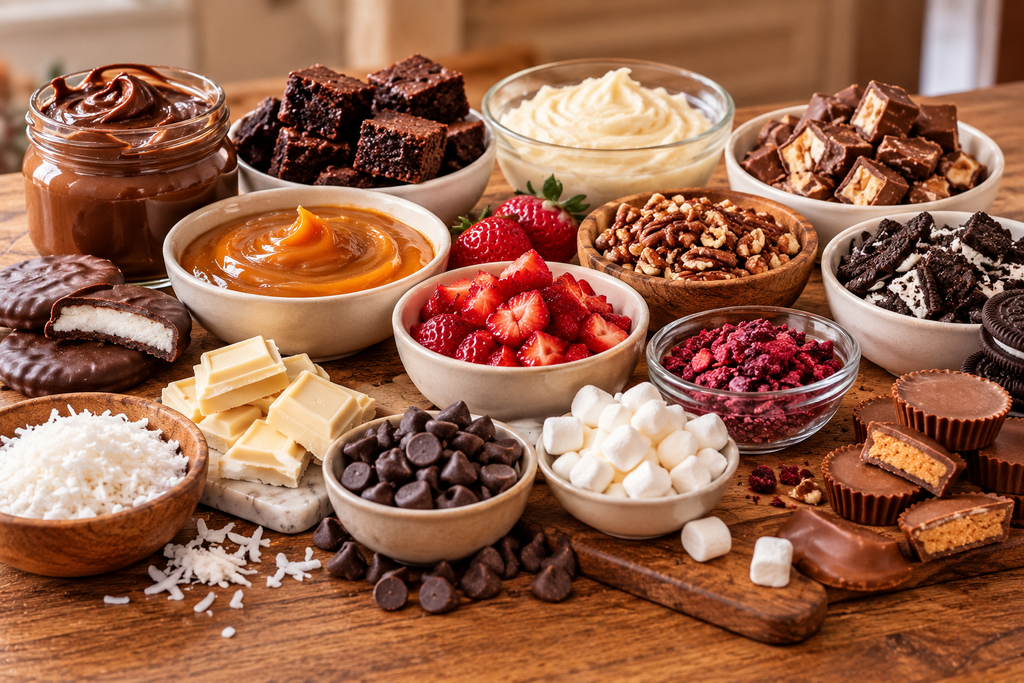
This is where things get interesting.
A peppermint patty already has enough structure to hold its shape. A brownie piece does too.
Nutella is completely different.
Caramel can be different again.
Instead of having one rule for every filling, I think about what I need that particular center to do while I’m assembling and baking the cookie.
Why I Freeze Nutella Before Stuffing Cookies
When I first started making Nutella stuffed chocolate chip cookies, I tried piping the Nutella directly into the center of the dough.
It was a huge mess.
The Nutella was difficult to contain, it leaked out, and the finished cookies looked terrible.
Since freezing had worked well with some of my other fillings, I decided to try it with the Nutella.
That made all the difference.
Now I line a cookie sheet with parchment paper and use a piping bag to pipe out portions of Nutella that are about 1 ounce each. You can also use a teaspoon if you don’t have a piping bag.
I freeze the Nutella for about an hour. While it’s freezing, I can make the cookie dough, so I’m not really adding an extra hour to the time it takes to make the cookies.
Once frozen, the Nutella is much easier to put into the middle of the dough and completely surround.
King Arthur Baking uses a similar method in their Nutella-stuffed cookies, portioning and freezing the Nutella before enclosing it in cookie dough.
I make my Nutella Stuffed Cookies often enough that now I’ll freeze a whole batch of Nutella portions at once and keep them in my freezer. That way they’re ready whenever I need them.
Freezing Doesn’t Work for Every Soft Filling
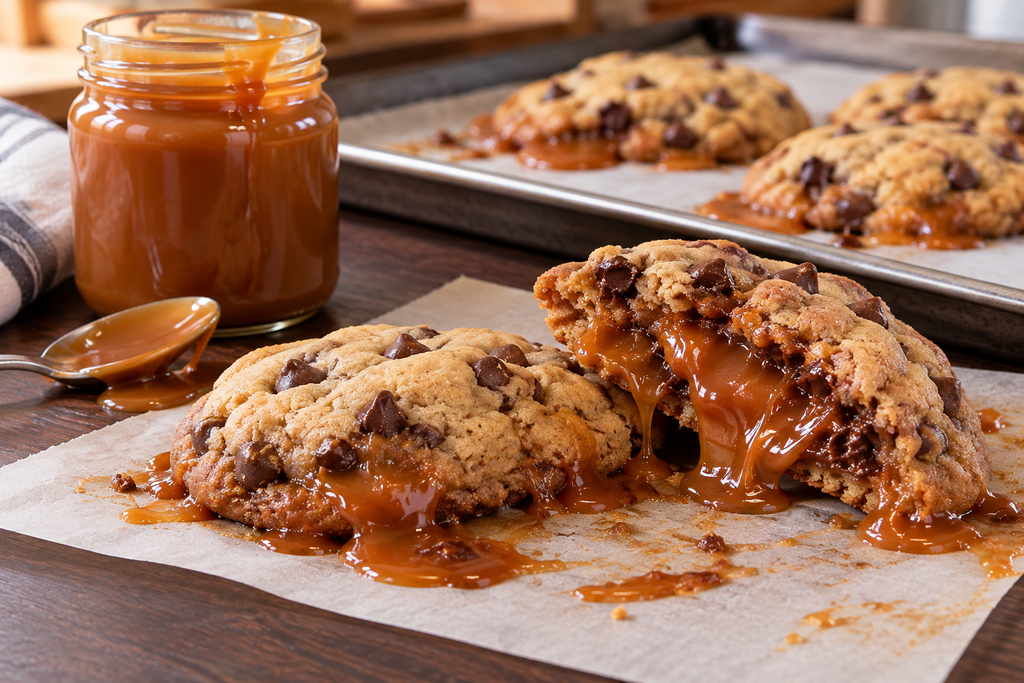
This is where I learned a lesson from caramel.
Before I started making my own caramel, I tried using caramel from a jar. Since freezing Nutella worked so well, freezing the caramel seemed like the logical solution.
Except the caramel didn’t really freeze.
I used it anyway.
The caramel leaked out of the bottoms, sides, and tops of the cookies. They weren’t just ugly. They were a sticky mess.
That experience taught me not to treat “freeze the filling” as a universal rule.
Some soft fillings become firm enough in the freezer to make them much easier to handle. Others don’t.
If you’re experimenting with a new filling, pay attention to what actually happens to it when it’s cold before assuming it’s ready to go inside an entire batch of cookies.
Solid Fillings Can Be Much Simpler
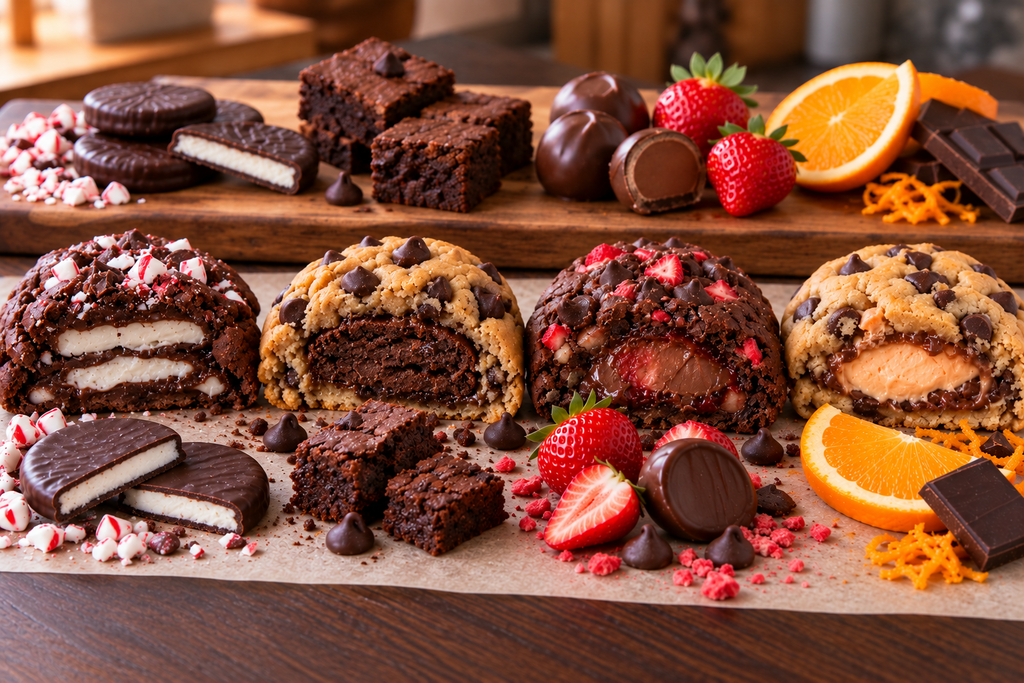
Something like a peppermint patty doesn’t need to be frozen just so I can handle it. It already has a defined shape.
The same is true of a brownie piece.
My Hidden Mint Peppermint Patty Cookies and Brownie Stuffed Pumpkin Chocolate Chip Cookies are good examples.
I’ve also worked with truffle and ganache-style centers and cream centers in cookies such as my Chocolate Strawberry Cookies with Truffle Centers and Chocolate Orange Cream Center Cookies.
Each one is a little different.
That’s part of what makes creating stuffed cookies fun.
How Much Filling Should You Put Inside?
I wish there was one measurement that worked for every stuffed cookie, but there isn’t.
The amount depends on the filling and the size of the cookie.
My giant bakery-style cookie dough balls are always 5 ounces of dough before I add the filling or toppings.
Once they’re stuffed and finished, many of those cookies end up weighing around 6 ounces.
That’s an important distinction. I’m not trying to divide 5 ounces between the dough and filling. I start with 5 ounces of dough, then add the center.
That gives me enough dough to completely surround a substantial filling.
For my Nutella stuffed cookies, I know from experience that approximately 1 ounce of Nutella works with the cookie I’m making. I wouldn’t automatically use 1 ounce of every other filling just because that amount works for Nutella.
A solid center and an ounce of something that turns almost liquid in the oven can behave very differently.
The goal isn’t to fit the largest possible amount of filling inside the cookie. I want enough to create that wonderful center when someone breaks the cookie open, while still leaving enough dough to hold everything together.
How to Completely Seal Stuffed Cookies
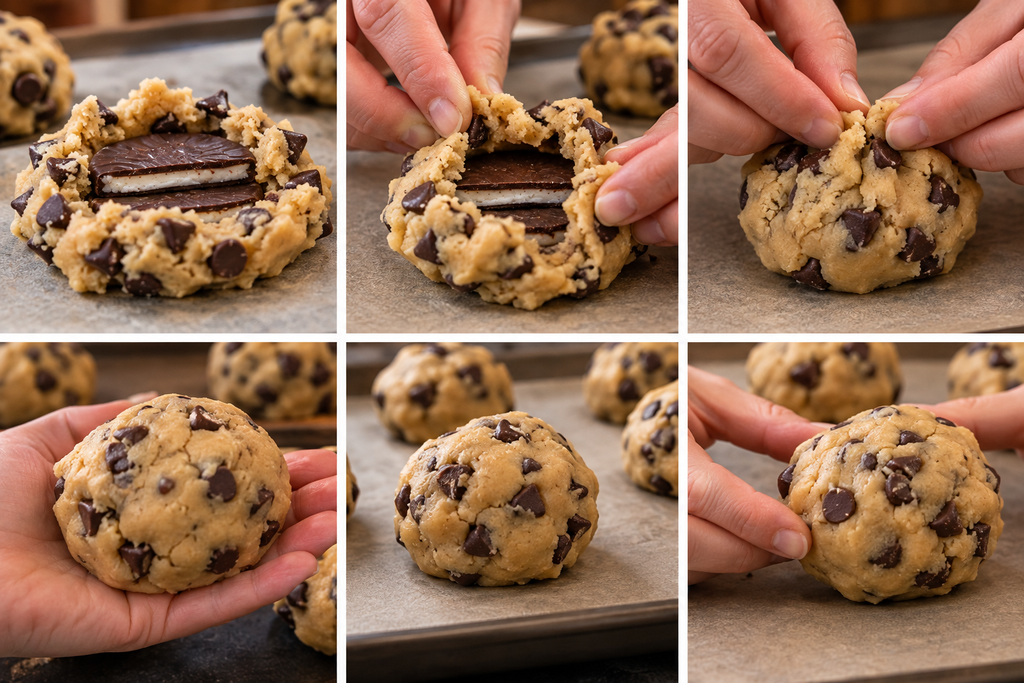
This is one step I don’t rush.
Once the filling is in the middle, I bring the dough completely around it and close the seam.
Then I look at the cookie from every direction.
I’m checking for visible filling, cracks, and areas where the dough looks unusually thin.
If I see a spot that makes me wonder whether it will hold, I fix it before the cookie goes into the oven.
I also try to keep the filling reasonably centered. If there’s a thick layer of dough on one side and a very thin layer on the other, that thin side is much more likely to give me trouble.
It doesn’t have to be mathematically perfect. We’re making cookies, not engineering equipment.
I just want enough dough surrounding the entire center to keep the filling where it belongs.
Why I Always Bake One Test Cookie
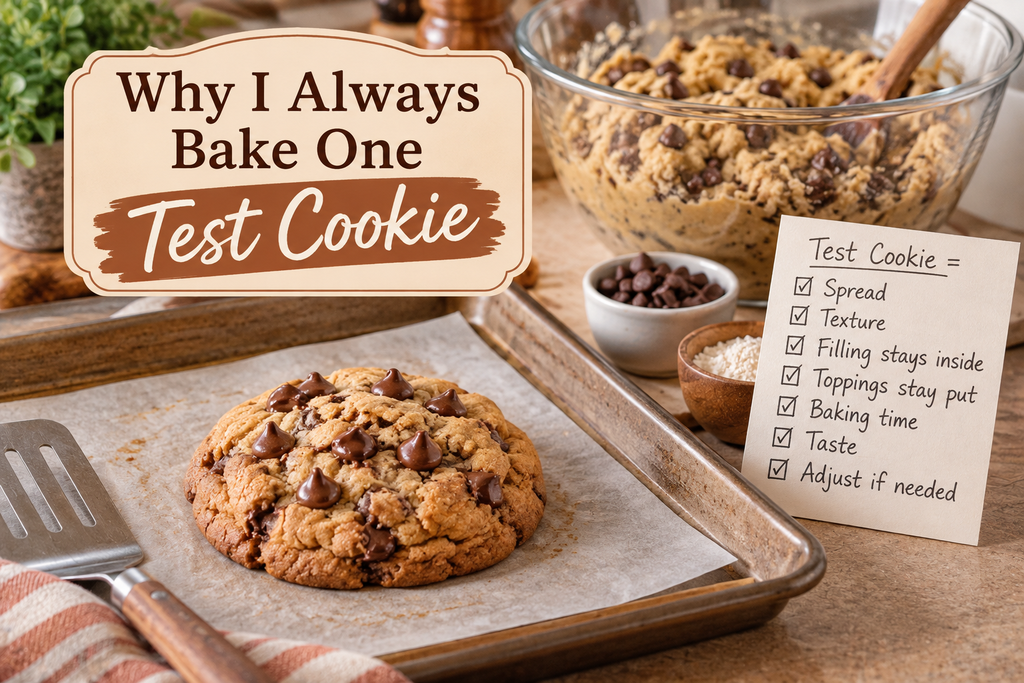
If you’ve read many of my cookie recipes, you probably already know this rule.
Bake one test cookie.
I do this with all of my giant cookies, but it’s especially helpful when I’m experimenting with a stuffed cookie.
The first cookie tells me how the dough spreads and whether the texture looks right. It also gives me a chance to see what the filling does in the oven.
If the center stays inside and the cookie spreads beautifully, I don’t change anything.
If something goes wrong, I have an entire bowl of dough left that I can still adjust.
If the cookie spreads too much and the dough seems sticky, I may gradually add a little more flour.
If it barely spreads and the dough seems dry, I may need a little more moisture.
If the filling escapes, I look at the cookie before deciding what to change. Maybe there was a weak spot in the dough. Maybe I used too much filling. Maybe the filling itself wasn’t a good choice.
One imperfect cookie is useful information.
An entire baking sheet of imperfect cookies is a much bigger problem.
You can read more about why I always bake one test cookie in my Tips for the Perfect Cookie guide.
Do Stuffed Cookies Need to Bake Longer?
You might expect stuffed cookies to need a completely different baking method.
Mine don’t.
I bake my stuffed cookies the same way I bake my other giant bakery-style cookies, and I’ve never had a problem with them needing extra baking time simply because they’re stuffed.
I’m looking for golden edges, no wet spots on top, and the amount of spread I expect from that particular dough.
Then I let the cookies finish baking on the hot pan as they cool.
I don’t wait for the entire cookie to look completely firm before taking it out of the oven. By the time a giant cookie looks thoroughly baked in the oven, it can end up overbaked after it has finished cooling on the hot pan.
And a gooey filling isn’t an indication that the cookie is raw.
If I’ve put Nutella, caramel, chocolate, or another soft filling inside, I want that center to stay soft.
For my bakery-style cookies, my standard oven instruction is:
“Preheat the oven to 350°F. If you’re baking at an elevation above 4,000 feet, try 325°F instead.”
I bake at an elevation above 4,000 feet, so that’s something I always have to consider.
Individual recipes may have their own instructions, so always follow the recipe you’re making first.
Stuffed Cookie Troubleshooting
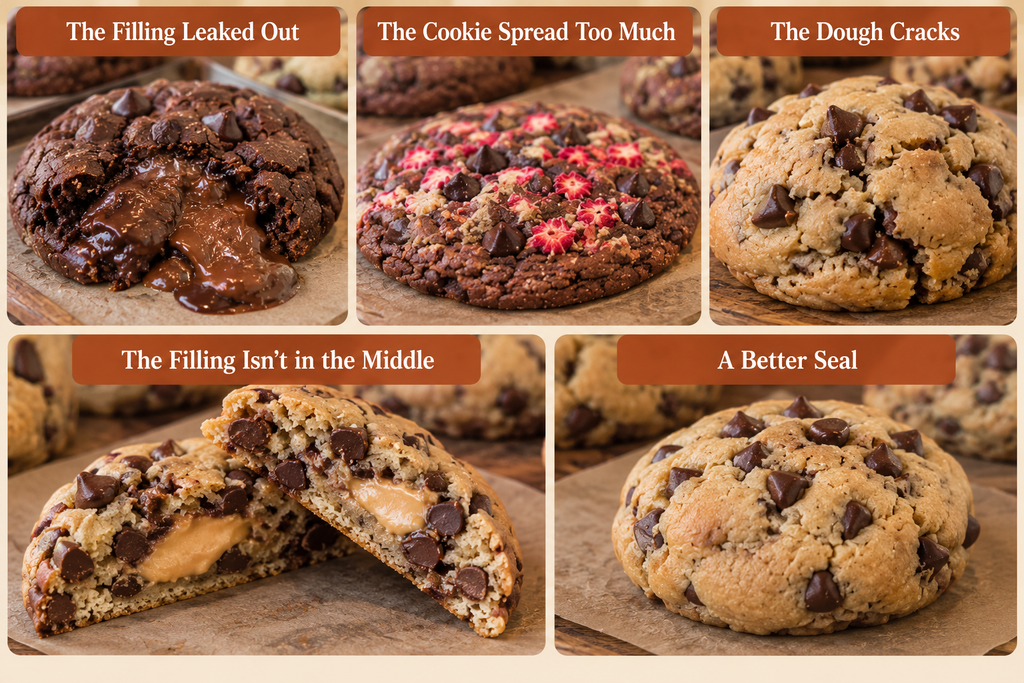
Most stuffed-cookie problems come back to one of three things: the dough, the filling, or the way the cookie was assembled.
Here’s where I’d start.
The Filling Leaked Out
Look at where it escaped.
If it came through one small area, check whether the dough was thin or cracked there.
If the filling seemed to escape everywhere, consider whether it became much softer in the oven than you expected or whether there was simply too much of it.
If you’re trying a new soft filling, it may be worth testing the filling itself before making the whole batch.
The Cookie Spread Too Much
Look at the dough rather than automatically blaming the filling.
If my test cookie spreads too much and the dough seems sticky, I may gradually add flour and test again.
For more help with spreading, see my Tips for the Perfect Cookie.
The Dough Cracks Around the Filling
The dough may be too dry, or you may be trying to stretch too little dough around too much filling.
If I’ve made my dough too dry, I add milk 1 tablespoon at a time.
Whatever the cause, I fix visible cracks before baking.
The Filling Isn’t in the Middle
Try to position the filling in the center before bringing the dough around it, then keep the thickness of the dough reasonably even as you shape the cookie.
It doesn’t have to be exact. You just don’t want most of the dough on one side of the filling.
Can You Make Smaller Stuffed Cookies?
Absolutely.
You don’t have to make 5-ounce cookies just because that’s the size I normally make.
A smaller cookie simply gives you less room for filling and less dough to surround it.
That means you’ll probably need to reduce the amount of filling and adjust the baking time.
This is another situation where I would start with one test cookie rather than guessing what an entire batch needs.
How I Freeze and Reheat Stuffed Cookies
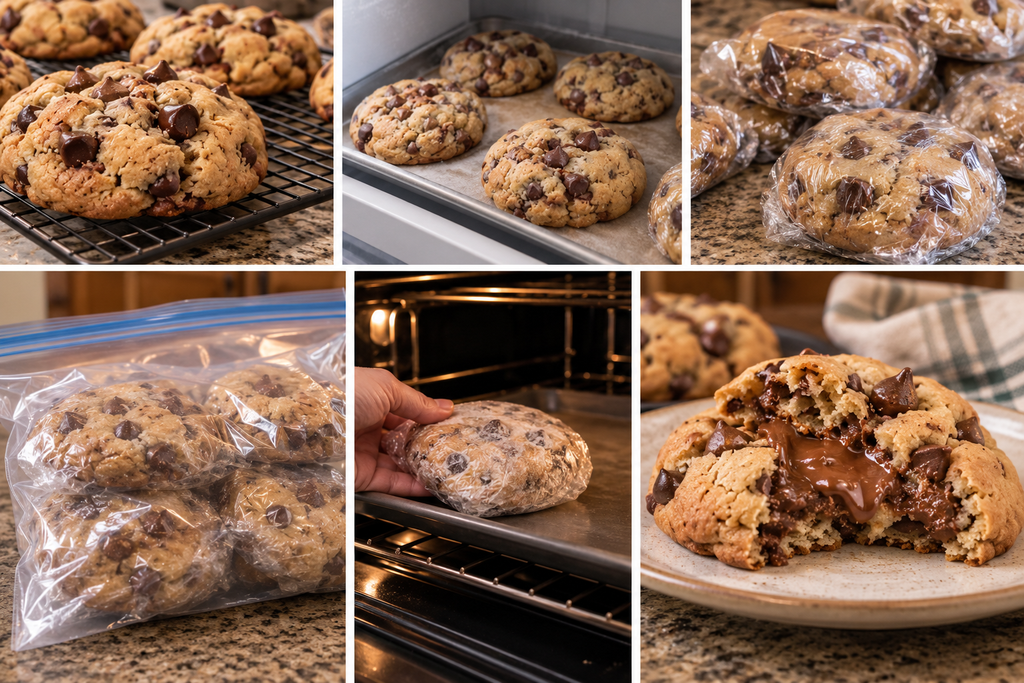
I prefer freezing my baked cookies rather than storing them in the refrigerator because I’ve found that refrigeration tends to dry them out.
Once my cookies have cooled enough after baking, I put them directly into the freezer to firm up.
After they’re frozen, I put them into their packaging. Then I place the packaged cookies into freezer bags before returning them to the freezer.
I make sure I get as much air as possible out of the freezer bags before sealing them because I don’t want the cookies getting freezer burn.
When I’m ready to reheat one, I put the frozen cookie into a cool oven, turn the oven to 350°F, and let it warm for approximately 8–12 minutes, depending on the size of the cookie.
I prefer this method to microwaving my cookies.
The one thing to keep in mind is the filling. Some fillings may have their own food-storage requirements, so follow the storage directions for the individual recipe when necessary.
Stuffed Cookies FAQs
Do You Have to Freeze the Filling for Stuffed Cookies?
No. Freezing works beautifully for some soft fillings, including the Nutella I use, because it makes them easier to handle.
Other fillings may not freeze firm enough for this method, and solid centers such as peppermint patties and brownie pieces may not need freezing at all.
How Do You Keep the Filling Inside Stuffed Cookies?
Completely surround the filling with enough dough and inspect the cookie for cracks, exposed filling, and thin areas before baking.
Don’t assume that adding more filling will make a better cookie. You still need enough dough around the center to contain it.
Can I Stuff Any Cookie Dough?
I wouldn’t assume every dough will work equally well.
I want a dough with enough structure to hold a filling and one that I can shape without it cracking apart or sticking to everything.
How Do I Know When Stuffed Cookies Are Done?
I use the same visual cues I use for my other giant cookies: golden edges, no wet spots on top, and the expected amount of spread.
Then I allow the cookies to finish baking on the hot pan while they cool.
Can I Make Stuffed Cookies Smaller?
Yes. You’ll probably need less filling and a shorter baking time because there’s less dough surrounding the center.
Start with one test cookie and adjust from there.
Can You Freeze Stuffed Cookies?
I freeze my baked stuffed cookies regularly, and it’s my preferred way to store them.
Just remember that the ingredients in a particular filling may require different handling, so check the individual recipe when necessary.
One Messy Cookie Can Teach You a Lot
I’ve made a lot of cookies over the years, and I’ve made plenty that didn’t turn out the way I pictured them in my head.
The Nutella that made a mess taught me a better way to prepare it.
The caramel that escaped from practically every direction taught me that a method that works beautifully for one filling may not work at all for another.
And all of those test cookies have taught me that one imperfect cookie doesn’t mean the batch is ruined.
That’s part of creating new cookies.
Bake one. Look at how it spread. Check the edges and the top. Break it open and see what happened inside.
If it’s exactly what you wanted, keep going.
If it isn’t, you’ve learned something before you’ve baked the other two dozen.
And there’s absolutely nothing wrong with eating the evidence.
Making every house feel a little more like home.

